

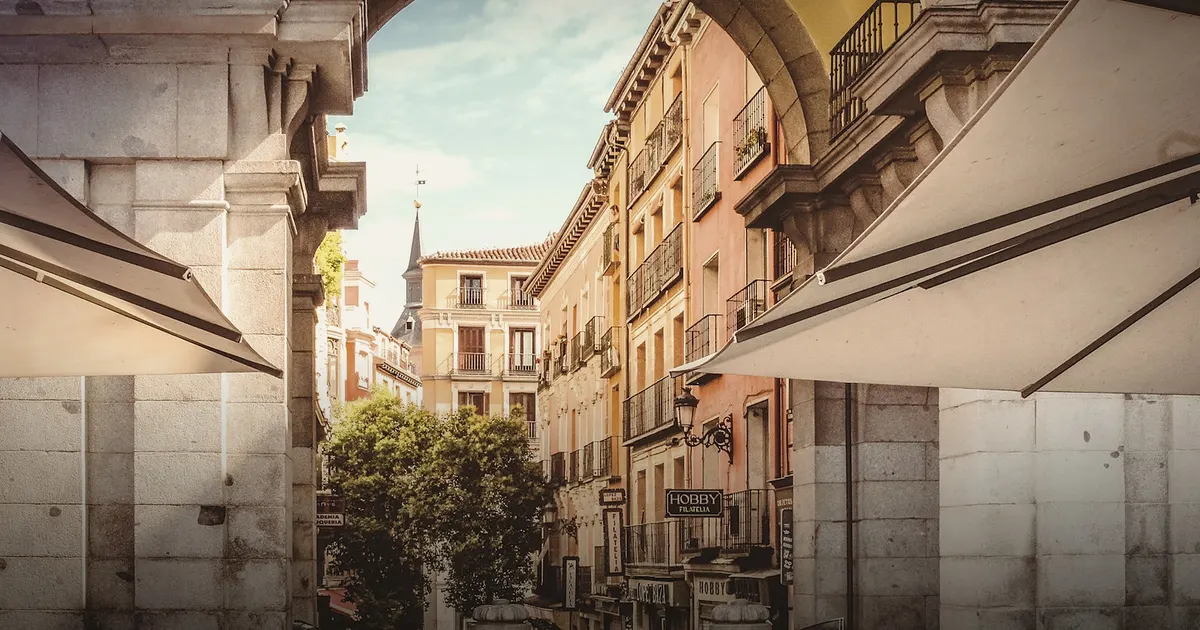
In 2026, Spain faces a massive housing crisis: in the second quarter, the property price index jumped by 12.2%. An acute shortage of affordable apartments and the gap between rent rates and incomes provoked mass protests. Central squares in Madrid and Barcelona are filled with tent camps of tenants demanding legislative changes.
Key takeaways
- The Spanish housing price index rose by 12.2% in the second quarter of 2026.
- Historical state policy led to 82.1% of families owning homes by 2001, but the 2008 crisis destroyed this system.
- A shortage of new construction and investment funds buying up apartments worsen the lack of affordable real estate.
- High unemployment (9.87% in the second quarter of 2026) deprives young people of the chance to rent separate housing.
- The share of foreign buyers of Spanish real estate exceeded 16% in the third quarter of 2026.
- Due to regulatory risks in Europe, investors increasingly transfer capital to predictable markets like Dubai.
Why are Spanish city squares filled with tents?
Central squares in Madrid, Barcelona, Valencia, and other major Spanish cities are filled with protesters' tents. The catalyst for mass street demonstrations was the high-profile eviction of an elderly capital resident from an apartment where her family lived for decades. The basis for her residency was a historical lease agreement, known in Spain as old rent (renta antigua).
People signed such contracts massively in the middle of the last century. They reliably protected tenants: the document allowed living in the apartment indefinitely, guaranteed minimal monthly rent increases, and gave the right to inherit the lease terms. The situation changed drastically when the old laws expired and historical buildings became the property of investment funds.
New owners initiated court proceedings to evict tenants and re-rent the vacated spaces at current market rates. The eviction, carried out with police participation and strictly within current legislation, caused a powerful public outcry. It clearly exposed the vulnerability of ordinary tenants to large corporate landlords. Street actions quickly grew into a massive protest against the state's entire housing policy. Tent cities became a symbol of resistance, and protesters demand a stop to evictions of vulnerable groups and a radical revision of laws.
How did Spain become an "ownership society"?
The current housing affordability crisis is closely tied to political decisions of the late twentieth century. Initially, a significant part of Spaniards lived in rented apartments, which was considered absolutely normal. However, the government took a purposeful course to change the ownership structure. The country's leadership believed that mass real estate ownership would ensure social stability: citizens burdened with mortgages and caring for their own homes are less prone to radical protests.
To implement this strategy, the state launched massive construction and provided the population with cheap loans. Later, mortgage lending was liberalized, which spurred demand. The authorities' efforts bore fruit: a stable life scenario formed, where rent was viewed only as a short transit stage before buying one's own apartment.
According to the National Statistics Institute of Spain (INE), by 2001, the share of home-owning families reached 82.1%. Spain turned into a classic "ownership society," where having one's own apartment became the main marker of belonging to the middle class and a guarantee of financial security.
What happened to the market after the financial crisis?
The system built over decades failed seriously during the 2008 global financial crisis. The halt of the construction sector and massive job losses meant hundreds of thousands of Spaniards lost the ability to service their mortgage loans. Banks began seizing apartments en masse for debts, forming giant portfolios of distressed assets.
Amid the market collapse, large international investment funds entered Spain. They bought entire pools of seized real estate from financial organizations at a significant discount. In a short time, these corporations became the country's largest private landlords. Real estate finally transformed from a basic need into a pure investment instrument.
Previously, having a stable job guaranteed the ability to pay a mortgage. Now, apartments are increasingly purchased not for personal living, but to protect capital from inflation and receive rental income. Wealthy citizens accumulate the housing stock in their hands, while the share of people unable to buy even their first apartment grows rapidly.
Why are prices rising and who lacks housing?
Today, the Spanish real estate market features a critical imbalance between the cost per square meter and real incomes. According to INE, the housing price index (IPV) in the second quarter of 2026 increased by 12.2% year-on-year. Meanwhile, the average interest rate on new mortgage loans in July 2026 stood at 3.01%.
A chronic shortage of new construction worsens the situation. Private developers reduced project completions due to complex bureaucracy and strict regulatory restrictions from regional authorities. Requirements to allocate a significant share of space in commercial projects for social housing make many construction sites economically unviable. As a result, developers simply refuse to launch new complexes.
Economic factors further limit housing affordability. The unemployment rate in Spain remains high: in the second quarter of 2026, it was 9.87%. Rent payments consume a critical share of young professionals' incomes. Due to high rates and difficulties finding stable work, Spanish youth must stay in their parents' homes much longer than their peers in other European countries.
What role do foreign investors play?
Consistently high demand from non-residents puts additional pressure on pricing. Foreign buyers actively purchase properties in large metropolises and resort areas, viewing Spanish real estate as a reliable asset. According to the College of Property Registrars (Colegio de Registradores), in the third quarter of 2026, the share of foreign buyers exceeded 16% of the total number of registered transactions.
The influx of external capital maintains high prices, making buying an apartment almost impossible for local middle-income professionals. In response to growing social tension and street protests, the government has to resort to emergency regulatory measures. Authorities are discussing introducing long moratoriums on evicting socially vulnerable groups, forcibly extending current lease agreements, and directly banning investment funds from buying up housing stock. Such initiatives create serious regulatory risks for private landlords and reduce the market's investment appeal.
Where to redirect capital: a comparison with the Dubai market
Amid growing regulatory risks, protest moods, and possible yield restrictions in Europe, private investors revise their strategies. Capital increasingly flows to markets with more predictable legislation, where owners' rights are reliably protected, and the state stimulates investment influx. Dubai is one of the main beneficiaries of this trend, offering no taxes on rental income and transparent rules of the game.
According to YAFF calculations based on open Dubai Land Department data, the emirate's market shows high activity. In October 2026, 9,225 residential sales transactions were registered.
| Dubai market metric | Value (October 2026) |
|---|---|
| Median residential transaction price | 338,902 USD (1,244,619 AED) |
| Median price per m² (ready apartments) | 4,105 USD/m² (15,078 AED/m²) |
| Median price per m² (off-plan) | 5,182 USD/m² (19,033 AED/m²) |
| Share of under-construction properties (off-plan) | 66% |
YAFF calculation.
The dynamics of the cost per square meter in Dubai indicate market maturity. Ready apartments show moderate annual growth of 1.7%, while the off-plan housing segment shows a slight correction of 1.5%. Investors focused on family rentals actively buy townhouses. For example, the median transaction price for a ready villa in popular communities is 3,400,000 AED. Unlike European markets subject to political pressure, the emirate maintains a balance between the interests of developers, investors, and tenants.
Key figures
| Metric | Value | Period |
|---|---|---|
| Housing price index (IPV) growth in Spain | 12.2% [2] | Q2 2026 |
| Average rate on new mortgage loans | 3.01% [3] | July 2026 |
| Unemployment rate in Spain | 9.87% [4] | Q2 2026 |
| Share of foreign real estate buyers | >16% [5] | Q3 2026 |
| Median residential transaction price in Dubai | 338,902 USD [6] | October 2026 |
Sources:
- [2] Press Release: Housing Price Index (HPI). Base 2025. Second Quarter 2026.
- [3] Press Release: Mortgage Statistics (M). July 2026. Provisional data.
- [4] INEbase / Labour market /Economic activity, employment and unemployment
- [5] Registradores de España
- [6] Dubai Land Department — open transaction data (YAFF calculation)
FAQ
Why did mass tenant protests start in Spain?
Protests were provoked by a record gap between rent costs and real incomes. High-profile evictions of tenants by corporate building owners became the catalyst for street actions.
How much did housing prices rise in Spain?
According to the National Statistics Institute (INE), in the second quarter of 2026, the housing price index (IPV) increased by 12.2% year-on-year.
What share of Spaniards own their homes?
Historically, Spain was a country of owners — by 2001, this figure reached 82.1%. However, after the 2008 financial crisis, many lost real estate due to mortgage debts, and the share of tenants began to grow.
Can foreigners freely buy real estate in Spain?
Yes, foreign demand remains consistently high. In the third quarter of 2026, the share of transactions involving non-residents exceeded 16% of the total volume, which puts additional pressure on prices.
What alternatives to Spain do real estate investors consider?
Due to regulatory risks in Europe, investors often choose the UAE, where there are no rental taxes and strict restrictions for owners. According to YAFF calculations based on open DLD data, the median residential transaction price in Dubai in October 2026 was 338,902 USD.